The Boredom Cure
4th May 2026Words by Ella Hannyngton.
With the exposure to fast-paced, short-form content ever increasing it’s no wonder attention spans are rapidly declining. Perhaps instigated with the invention of Vine and its six second limit to produce entertaining and compelling videos, the constant pull for shorter and snappier content seems to have rewired our brains to the point where attention span has all but collapsed entirely. A 2025 study from Nanyang Technical University found that 68% of young people from Singapore and Australia had serious difficulty with focusing and many were unable to engage with content longer than one minute.
It’s causing problems not just with teenagers but has begun seeping into all aspects of life and culture. Actress Jameela Jamil exposed that narratives are intentionally being made less complex due to what is dubbed “second screen viewing”, where filmmakers are forced to acknowledge that viewers will be watching alongside being on their phones. Gone are the days with complex, layered narratives and ideas that were shown, not blatantly spoon-fed to the viewer.
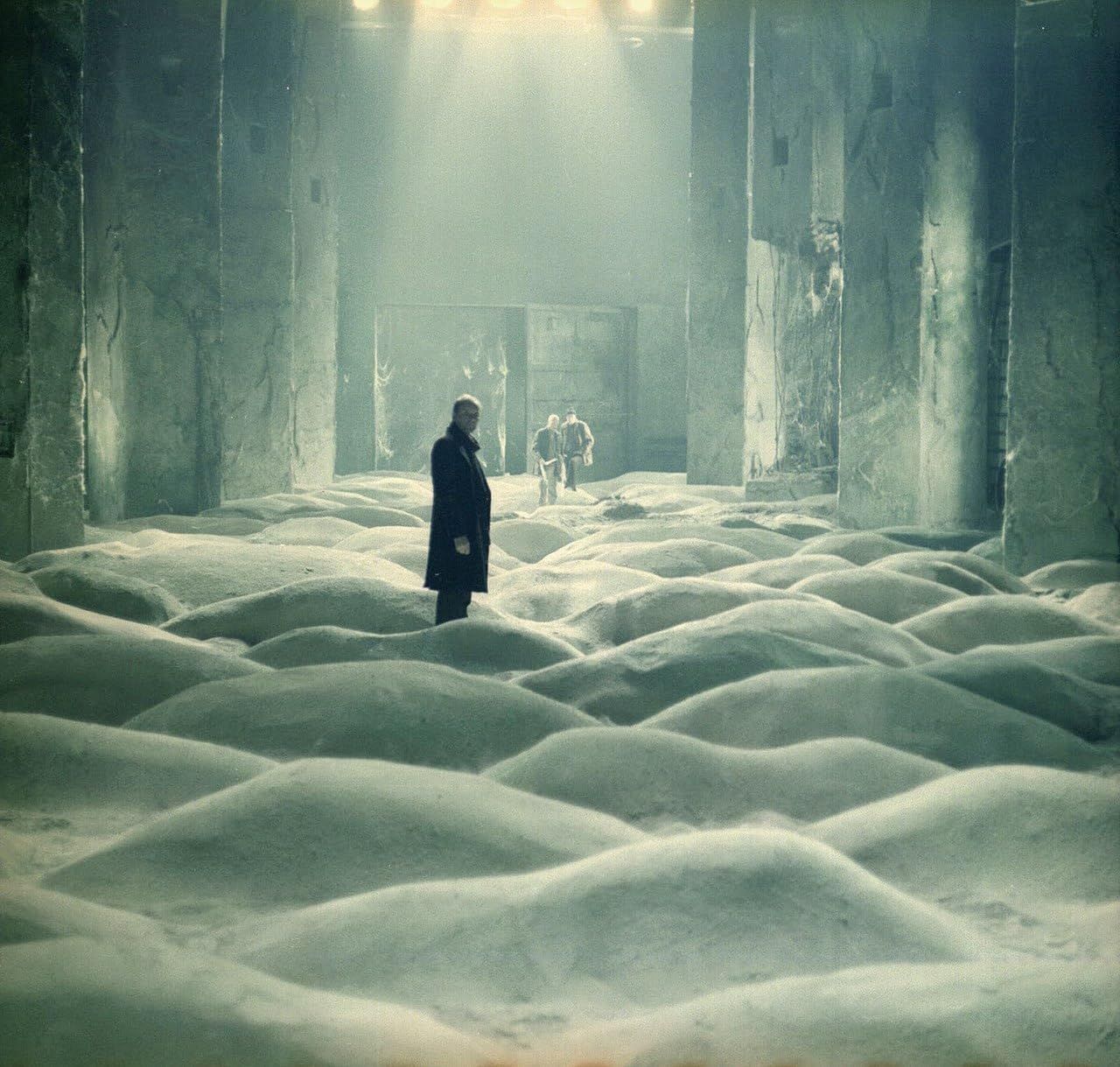
The average shot length (ASL) of modern films is 2.5 seconds, compared to 12 seconds in the 1930s and 35 seconds in the early 1900s. Andrei Tarkovsky's Stalker (1979) has an ASL of 88 seconds, with the longest scene stretching in at 6 minutes 50 seconds.
Loosely adapted from the Novel Roadside Picnic by Arkady and Boris Strugatsky, Stalker follows a man working illegally as a “stalker” who leads people through “The Zone”, a landscape devoid of the laws of physics, to a room at its centre that will grant whoever steps inside the deepest desires of their heart.
The beginning of Stalker is an extremely difficult watch. Not due to explicit themes but its achingly painful slowness, especially when compared with content today. Throughout the first hour, little action has taken place and even less conversation. Shots linger and the barren landscape is drenched in a sepia-toned filter. For the next two and a half hours the pacing continues to slow, reaching the climactic six-minute-long scene where the professor gloats to a colleague on the phone about finding “the room” before revealing his plans to destroy it with a bomb. Containing the most action throughout the entire film, the long camera shots of Stalker juxtapose the format of modern films and their fast cuts during action scenes. Tarkovsky builds pressure by suffocating the audience to the point of boredom in earlier scenes until the high ASL becomes hypnotic. The slow pacing forces the viewer to experience “The Zone” in its entirety along with the protagonists, embodying their descent into madness and allowing time to ponder. Leaving more questions unanswered than resolved, the viewer walks away with an introspective notion as if they have gone on the same journey as the characters.
Despite an enduring sense of boredom and an itch to just check your phone, Stalker embodies the practice of pushing through the discomfort of having a short attention span and proving that the phenomena can be reversed or at least fixed temporarily. In a time where it feels increasingly difficult to keep focus or be entertained without constant, fast-paced stimuli it is more important than ever to simply learn to be bored again.